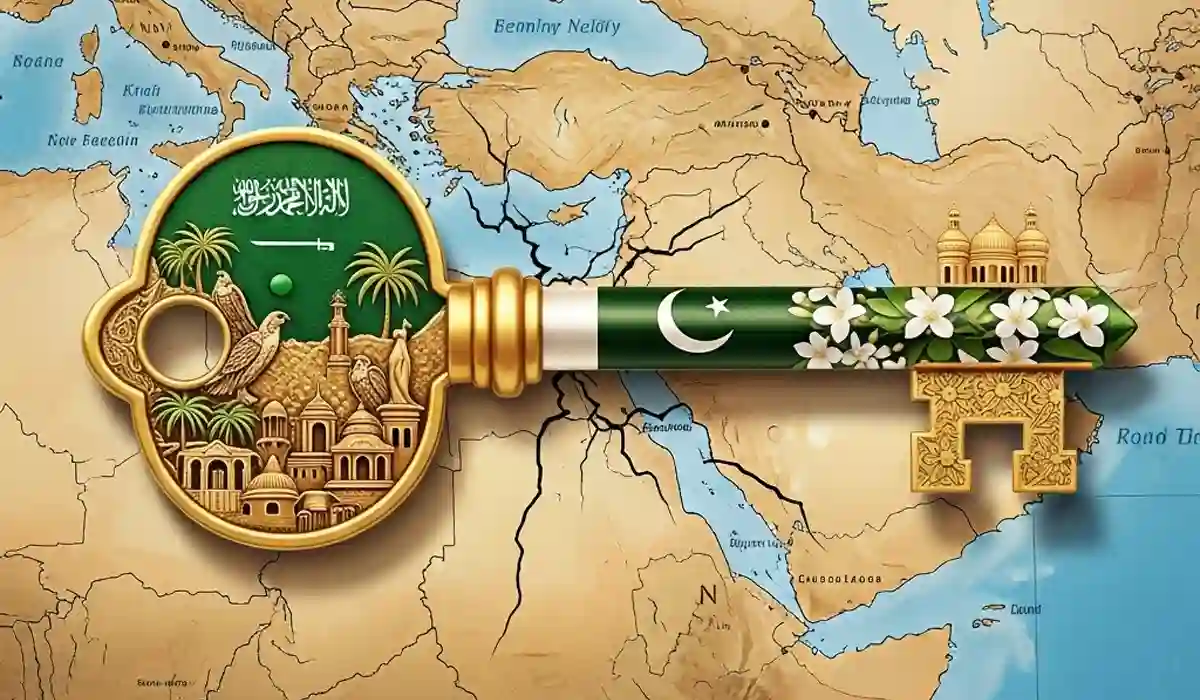
In a move that analysts are calling a significant recalibration of geopolitical loyalties, Pakistan and the Kingdom of Saudi Arabia have inked a multi-billion dollar strategic investment pact. This agreement, finalizing years of deepening ties, extends far beyond economics, potentially redrawing the strategic map of the Middle East and South Asia and causing strategic recalibrations in world capitals from Washington to New Delhi.
Beyond the Handshake: What the Deal Entails
The partnership, announced during a high-level Saudi delegation’s visit to Islamabad, is not merely symbolic. Its core is a substantial $5 billion investment from Saudi Arabia into Pakistan’s struggling economy, focusing on key sectors like:
- Energy: Refinery upgrades and renewable energy projects.
- Infrastructure: Development of deep-sea ports, particularly Gwadar, which is also a cornerstone of China’s CPEC project.
- Mining: Tapping into Pakistan’s vast mineral resources.
- Defense: Enhanced cooperation and potential joint production.
This economic lifeline is a crucial stabilizer for Pakistan. However, the true weight of the agreement lies in its unspoken strategic dimensions—a mutual alignment of interests that challenges the existing world order.
The Geopolitical Ripple Effect: Why the World is Watching
This reinvigorated alliance sends a powerful message to other global powers, necessitating a reassessment of their regional strategies.
1. The United States: A Balancing Act
For the U.S., this is a complex development. While Washington maintains a strong, decades-old security relationship with Riyadh, it has been wary of Saudi Arabia’s independent foreign policy moves, including its recent détente with Iran, brokered by China. A Saudi-Pakistan axis that draws closer to China (a major partner to both nations) could dilute U.S. influence in the region. American policymakers will be watching closely to ensure this new bloc does not directly contradict its interests, particularly regarding Israel.
2. India: A Direct Strategic Concern
This development is perhaps most acutely felt in New Delhi. India views a Pakistan bolstered by Saudi wealth and legitimacy as a significant strategic challenge. It complicates India’s efforts to diplomatically isolate Pakistan over terrorism and the Kashmir issue. Furthermore, India has built a strong relationship with Saudi Arabia and other Gulf states based on energy and trade. A tight Riyadh-Islamabad bond forces India into a delicate diplomatic dance, balancing its Gulf partnerships with its core national security concerns regarding Pakistan.
3. Israel: An Unwelcome Fortification
For Israel, a stronger Saudi-Pakistan partnership is an unwelcome obstacle. Israel’s longstanding goal of normalizing relations with Saudi Arabia—a key U.S. and Israeli objective—becomes infinitely more complex. Pakistan, a historically staunch supporter of Palestinian statehood and a non-recognizer of Israel, now holds greater influence in Riyadh. Any move by Saudi Arabia toward Israel would now likely require at least considering Islamabad’s reaction, making normalization a more distant prospect.
The EEAT Perspective: Analysis, Not Speculation
It is critical to approach this news with nuance, avoiding sensationalist claims. Nations are not “afraid”; they are strategically watchful, recalculating, and adapting. This alliance represents a classic case of multi-alignment, where countries forge partnerships based on specific national interests rather than rigid Cold War-style blocs.
Saudi Arabia’s goal is clear: diversify its economy and its international partnerships under its Vision 2030, reducing its historical dependency on the West. Pakistan’s aim is equally clear: secure economic stability and enhance its geopolitical standing.
The Road Ahead
The Saudi-Pakistan pact is a definitive shift in the region’s tectonic plates. It empowers both nations, giving them greater agency on the world stage. While it presents challenges for the U.S.-India-Israel nexus, it does not necessarily signify an overtly hostile bloc. Instead, it underscores a new, more multipolar world where alliances are fluid and interests are constantly being negotiated.
The coming months will reveal how this partnership translates from MoUs into concrete action and how other global powers choose to respond to this recalibration of power in a critically important region.