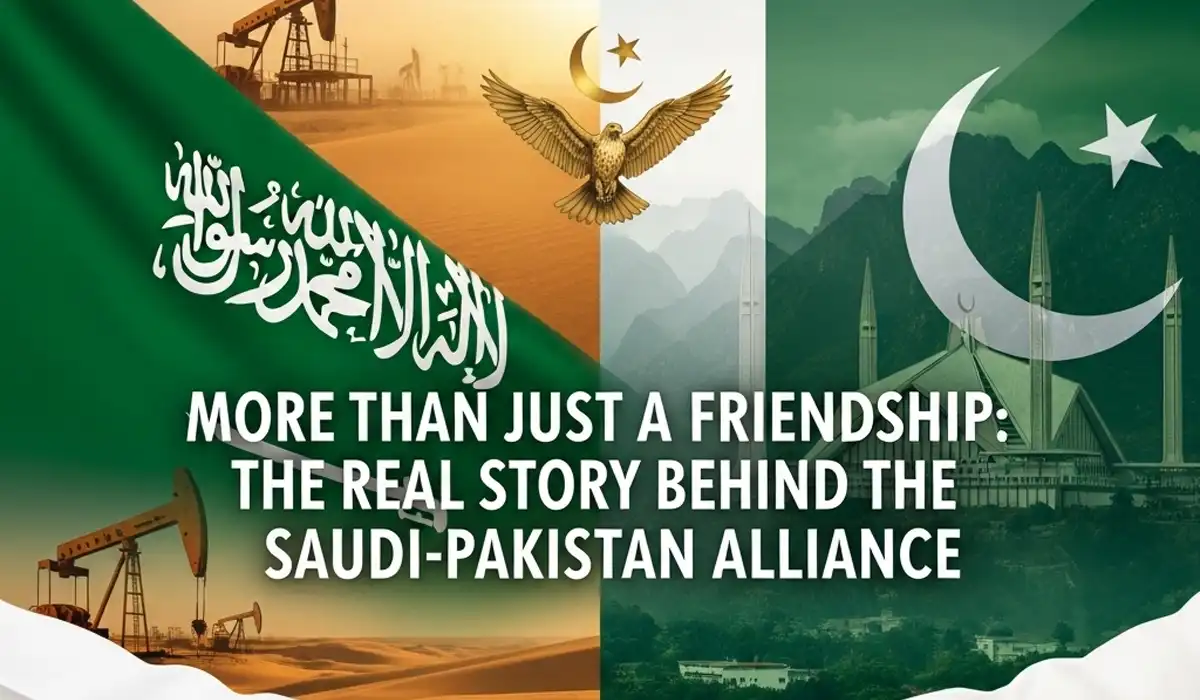
In a landmark move that could reshape the security architecture of the Middle East and South Asia, Saudi Arabia and Pakistan have signed a Strategic Mutual Defence Agreement in Riyadh. The pact, inked by Crown Prince Mohammed bin Salman and Prime Minister Shehbaz Sharif, declares that “any aggression against either country shall be considered an aggression against both”2.
This agreement elevates a decades-long partnership into a formal military alliance, sparking global debate and raising questions about its implications for India, Israel, the United States, and the wider Muslim world.
📜 Historical Context: From Brotherhood to Strategic Depth
- Saudi Arabia was among the first nations to recognize Pakistan after its independence in 1947.
- The two countries signed their first Treaty of Friendship in 1951, laying the foundation for military and economic cooperation.
- Over the decades, Pakistani troops have been stationed in Saudi Arabia, training more than 8,000 Saudi personnel since 1967.
- Riyadh has also provided financial support to Islamabad, including during Pakistan’s nuclear weapons development phase.
This long-standing relationship has now been formalized into a NATO-style defence pact.
⚔️ Key Provisions of the Defence Pact
- Mutual Defence Clause: Any attack on one nation will be treated as an attack on both4.
- Joint Security Cooperation: Expanded intelligence sharing, joint training, and military exercises.
- Nuclear Umbrella Debate: Analysts suggest the pact could effectively place Saudi Arabia under Pakistan’s nuclear deterrence, though officials have avoided explicit references5.
- Regional Stability Goal: Both governments emphasize that the agreement is aimed at “achieving peace and stability in the region and the world”.
🌍 Regional and Global Reactions
India
India’s Ministry of External Affairs stated it will “study the implications of this development for national security and regional stability”, while reaffirming its commitment to protecting national interests8. Analysts in New Delhi view the pact as a potential strategic shield for Pakistan, though Saudi officials insist it is not directed against India10.
Israel
The timing of the pact—just days after Israel’s strike on Qatar—has been widely interpreted as a signal to Tel Aviv. With Israel being the only nuclear-armed state in the Middle East, the Saudi-Pakistan alliance is seen as a counterweight to its growing regional operations11.
United States
Washington, long the Gulf’s primary security guarantor, has remained cautious. Analysts note that the pact reflects waning Gulf confidence in U.S. protection and a pivot toward intra-Islamic security cooperation.
🔎 Expert Analysis
- Sahar Khan (Washington-based analyst): “While Pakistan has signed defence pacts before, this one is unprecedented in its scope and could serve as a template for future Gulf alliances.”
- Ali Awadh Asseri (Former Saudi Ambassador): “The pact blends Pakistan’s military expertise with Saudi Arabia’s financial strength and strategic location.”
- Indian Strategic Experts: Some warn that Saudi Arabia risks “outsourcing its security to a politically unstable Pakistan,” while others argue Riyadh will not jeopardize its $40+ billion trade relationship with India.
📈 Geopolitical Implications
- Shift in Gulf Security: The pact signals a move away from sole reliance on U.S. guarantees.
- Nuclear Deterrence Debate: Raises questions about whether Saudi Arabia is informally under Pakistan’s nuclear umbrella.
- India-Pakistan Dynamics: Islamabad may perceive the pact as a deterrent against future Indian strikes.
- Message to Israel: A united Islamic front against unilateral military actions in the region.
- Economic Angle: Saudi financial backing could provide Pakistan with much-needed economic relief, while Pakistan offers Riyadh military manpower and nuclear deterrence credibility.
📝 Conclusion
The Saudi-Pakistan Strategic Defence Pact is more than just a friendship—it is a calculated geopolitical alignment that could redefine power balances from South Asia to the Middle East. While both nations frame it as a step toward peace and stability, its ripple effects are already being felt in New Delhi, Tel Aviv, and Washington.
Whether this alliance becomes a stabilizing force or a new flashpoint will depend on how regional powers respond in the months ahead.