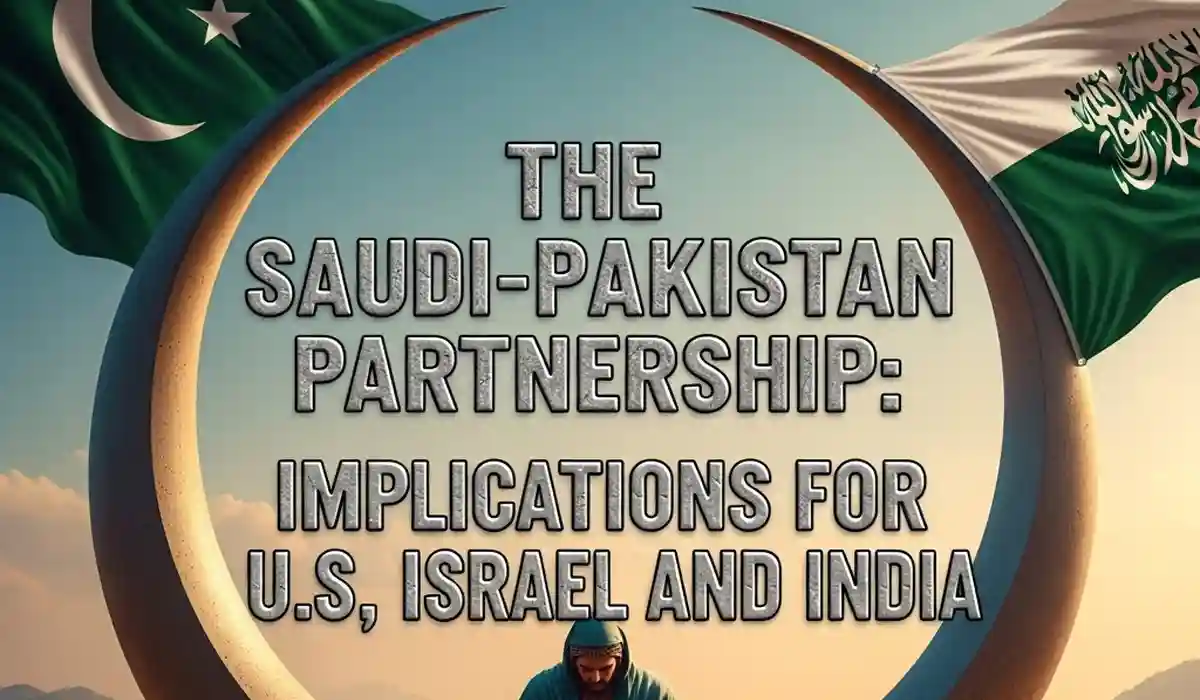
On September 17, 2025, Saudi Arabia and Pakistan signed a landmark Strategic Mutual Defence Agreement, marking a significant escalation in their decades-long security partnership. The pact, formalized during Pakistani Prime Minister Shehbaz Sharif’s visit to Riyadh, declares that any aggression against either nation will be considered an attack on both. This development, set against a backdrop of regional instability, has sparked widespread discussion about its implications for global powers, particularly the United States, Israel, and India. Below, we explore the context, significance, and potential geopolitical ripple effects of this alliance.
Background of the Saudi-Pakistan Partnership
Saudi Arabia and Pakistan share a historic relationship rooted in shared faith, economic ties, and military cooperation. Since the 1960s, Pakistan has trained Saudi troops, participated in joint military exercises, and stationed personnel in the kingdom during conflicts like the Iran-Iraq War. Saudi Arabia, in turn, has been a key financial backer, recently extending a $3 billion loan in December 2024 to bolster Pakistan’s foreign reserves. The new defense pact builds on this foundation, formalizing a mutual commitment to joint deterrence and defense.
The agreement’s timing is critical. It follows an Israeli airstrike on September 9, 2025, in Doha, Qatar, targeting Hamas leaders, which heightened Gulf anxieties about regional security. A subsequent Arab-Islamic summit in Doha, attended by 40 nations, including Pakistan, discussed a NATO-like alliance to counter such threats. The Saudi-Pakistan pact appears to be a direct response to these events, reflecting a broader shift among Gulf states to diversify security partnerships amid perceived U.S. retrenchment.
Key Elements of the Strategic Mutual Defence Agreement
The core of the pact lies in its mutual defense clause: an attack on one country is an attack on both. While the agreement does not explicitly mention nuclear capabilities, some reports suggest it could provide Saudi Arabia access to Pakistan’s nuclear arsenal as a deterrent, though Pakistani officials emphasize their conventional military strength is sufficient. The deal also aims to deepen cooperation in military training, joint exercises, and arms procurement, building on a 1982 agreement that institutionalized Pakistan’s role in Saudi security.
For Pakistan, the pact offers economic and strategic benefits, including continued Saudi financial support and enhanced regional influence as a pan-Islamic security provider. For Saudi Arabia, it strengthens defenses against threats from Iran, Houthi militias, and regional instability fueled by Israel’s actions.
Implications for the United States
The Saudi-Pakistan pact signals a growing Gulf skepticism about the U.S. as a reliable security guarantor. Despite hosting major U.S. military bases, Gulf states are uneasy about Washington’s perceived hesitance to restrain Israel, particularly after the Doha strike. The pact reflects Saudi Arabia’s move to diversify its security partners, aligning with nuclear-armed Pakistan to counterbalance regional threats.
This development could strain U.S.-Saudi relations, already tested in recent years. The U.S. has not publicly commented on the pact, but analysts suggest it underscores a broader regional trend of seeking alternatives to American security guarantees. This shift may prompt Washington to reassess its Middle East strategy, especially as Gulf states explore collective security frameworks like the proposed Arab-Islamic NATO.
Implications for Israel
For Israel, the pact introduces new complexities. The agreement’s timing, days after its Qatar strike, suggests it is partly a response to Israel’s regional actions, including its wars in Gaza and strikes on Iran. Saudi Arabia’s commitment to view aggression against Pakistan as an attack on itself could deter Israeli actions against Pakistan or its allies, complicating Israel’s security calculations.
While the pact does not explicitly create a “nuclear umbrella,” Saudi Crown Prince Mohammed bin Salman’s 2018 comment about potentially acquiring a bomb from Pakistan has fueled speculation about nuclear implications. However, experts like Asfandyar Mir from the Stimson Center argue that Pakistan’s conventional capabilities are sufficient for Saudi Arabia’s needs, reducing the likelihood of nuclear escalation.
Implications for India
India, which has cultivated robust ties with Saudi Arabia through trade, energy, and defense agreements like the 2006 Delhi Declaration and 2010 Riyadh Declaration, faces significant challenges from this pact. The agreement complicates India’s rivalry with Pakistan, especially after their May 2025 military clash involving drone and missile exchanges. The Congress party in India has called the pact a “setback” for Prime Minister Narendra Modi’s diplomacy, citing potential risks to national security.
The mutual defense clause raises concerns about Saudi Arabia’s stance in a potential India-Pakistan conflict. While Saudi officials emphasize that their relationship with India remains strong, the pact could embolden Pakistan, particularly given its nuclear capabilities. India’s Ministry of External Affairs has responded cautiously, stating it will “study the implications” for national security and regional stability while reaffirming its commitment to safeguarding national interests.
Additionally, the pact may impact India’s strategic initiatives, such as the India-Middle East-Europe Economic Corridor, which involves Saudi Arabia. Riyadh’s closer alignment with Pakistan could introduce uncertainties, requiring India to recalibrate its diplomatic approach to maintain strong ties with the kingdom.
Regional and Global Ramifications
The Saudi-Pakistan pact is a pivotal moment in West and South Asian geopolitics. It reflects a broader realignment as Gulf states seek new security partners amid regional volatility and declining U.S. influence. The agreement’s emphasis on mutual defense could deter aggression from regional actors like Iran or Israel but risks escalating tensions if misinterpreted.
The pact also aligns with discussions at the Doha summit about a collective security framework, potentially reshaping the Middle East’s security architecture. For India, it underscores the need to balance its growing partnership with Saudi Arabia against the risks posed by Pakistan’s strengthened position. For the U.S. and Israel, it signals a need to address Gulf anxieties and reassess their regional strategies.
Conclusion
The Saudi-Pakistan Strategic Mutual Defence Agreement marks a turning point in regional geopolitics, driven by shared security concerns and a shifting global order. While it strengthens the historic ties between Riyadh and Islamabad, it introduces complexities for the U.S., Israel, and India, each of which must navigate the pact’s implications for their strategic interests. As India studies the agreement’s impact and Gulf states explore new alliances, the global community watches closely to see how this partnership will reshape the delicate balance of power in the Middle East and beyond.